Friday, September 9, 2011
Friday, September 2, 2011
volvo Swedish builder of commercial
AB Volvo is a Swedish builder of commercial vehicles, including trucks, buses and construction equipment. Volvo also supplies marine and industrial drive systems, aerospace components and financial services. Although Volvo was incorporated in 1915 as a subsidiary of AB SKF, a Swedish ball bearing manufacturer, the auto manufacturer considers itself officially founded on 14 April 1927, when the first car, the Volvo ÖV 4 series, affectionately known as "Jakob", rolled out of the factory in Hisingen, Gothenburg.
Volvo means "I roll" in Latin, conjugated from "volvere", in relation to ball bearing. The name Volvo was originally registered in May 1911 as a separate company within SKF AB and as a registered trademark with the intention to be used for a special series of ball bearing, but this idea was only used for a short period of time and SKF decided to use "SKF" as the trademark for all its bearing products.
In 1924, Assar Gabrielsson, a SKF Sales Manager, and Engineer Gustav Larson, the two founders, decided to start construction of a Swedish car. Their vision was to build cars that could withstand the rigors of Sweden's rough roads and cold temperatures. This has become a feature of Volvo products ever since.
The company AB Volvo had no activities until 10 August 1926, after one year of preparations involving the production of ten prototypes, was set up to carry out the car-manufacturing business within the SKF group. AB Volvo was introduced at the Stockholm stock exchange in 1935 and SKF then decided to sell its shares in the company. Volvo was delisted from NASDAQ in June 2007, but remains listed on the Stockholm exchange.
In 1999, Volvo sold its car division Volvo Cars to Ford Motor Company for $6.45 billion. The Volvo trademark was shared between Volvo AB, where it is used on heavy vehicles, and the unit of Ford, where it was used on cars. Volvo stopped posting profits in 2005 and in 2008, Ford decided to sell its interest in Volvo Cars; in August 2010, Ford completed its sale of Volvo to the parent of Chinese motor manufacturer Geely Automobile for $1.8 billion.
Contents
* 1 History
* 2 Business areas
* 3 Trademark
* 4 The Volvo brand
* 5 References
* 6 External links
volvo
volvo
volvo
volvo
volvo
volvo
Volvo means "I roll" in Latin, conjugated from "volvere", in relation to ball bearing. The name Volvo was originally registered in May 1911 as a separate company within SKF AB and as a registered trademark with the intention to be used for a special series of ball bearing, but this idea was only used for a short period of time and SKF decided to use "SKF" as the trademark for all its bearing products.
In 1924, Assar Gabrielsson, a SKF Sales Manager, and Engineer Gustav Larson, the two founders, decided to start construction of a Swedish car. Their vision was to build cars that could withstand the rigors of Sweden's rough roads and cold temperatures. This has become a feature of Volvo products ever since.
The company AB Volvo had no activities until 10 August 1926, after one year of preparations involving the production of ten prototypes, was set up to carry out the car-manufacturing business within the SKF group. AB Volvo was introduced at the Stockholm stock exchange in 1935 and SKF then decided to sell its shares in the company. Volvo was delisted from NASDAQ in June 2007, but remains listed on the Stockholm exchange.
In 1999, Volvo sold its car division Volvo Cars to Ford Motor Company for $6.45 billion. The Volvo trademark was shared between Volvo AB, where it is used on heavy vehicles, and the unit of Ford, where it was used on cars. Volvo stopped posting profits in 2005 and in 2008, Ford decided to sell its interest in Volvo Cars; in August 2010, Ford completed its sale of Volvo to the parent of Chinese motor manufacturer Geely Automobile for $1.8 billion.
Contents
* 1 History
* 2 Business areas
* 3 Trademark
* 4 The Volvo brand
* 5 References
* 6 External links
volvo
volvo
passo Japanese automaker Toyota
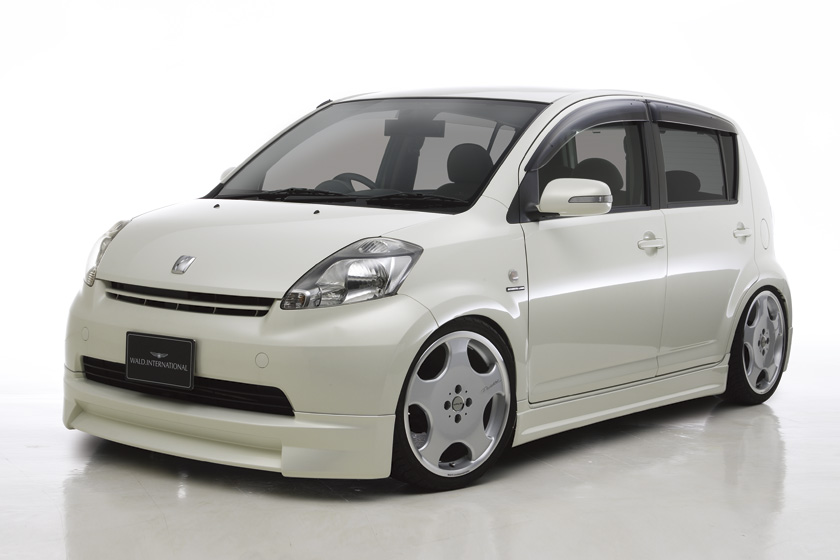
The Toyota Passo is a subcompact car by Japanese automaker Toyota, and is sold only in Japan. The small but roomy Toyota is available with a 1000cc engine in 2WD and 4WD, or a 1300cc engine with only 2WD. Transmission wise it only comes with a CVT Automatic box. The Passo is only available in Petrol and according to the Japanese Law, the car can carry 5 passengers (including driver).
The Passo comes in a range of 10 colours.
Banana Shake Metallic Black Mica Metallic Bright Silver Metallic Champagne Metallic Copal Maroon Brown Mica Mint Blue Metallic Copal Pearl White White Yellow Green Mica Metallic Shining Red.
The Toyota Passo shares bodies (minus indevidual details) with the Daihatsu Sirion, Daihatsu Boon, Perodua MyVi and the Subaru Justy
passo car
passo car
passo car
passo car
passo car
passo car
passo car
passo car
The Passo comes in a range of 10 colours.
Banana Shake Metallic Black Mica Metallic Bright Silver Metallic Champagne Metallic Copal Maroon Brown Mica Mint Blue Metallic Copal Pearl White White Yellow Green Mica Metallic Shining Red.
The Toyota Passo shares bodies (minus indevidual details) with the Daihatsu Sirion, Daihatsu Boon, Perodua MyVi and the Subaru Justy
passo car
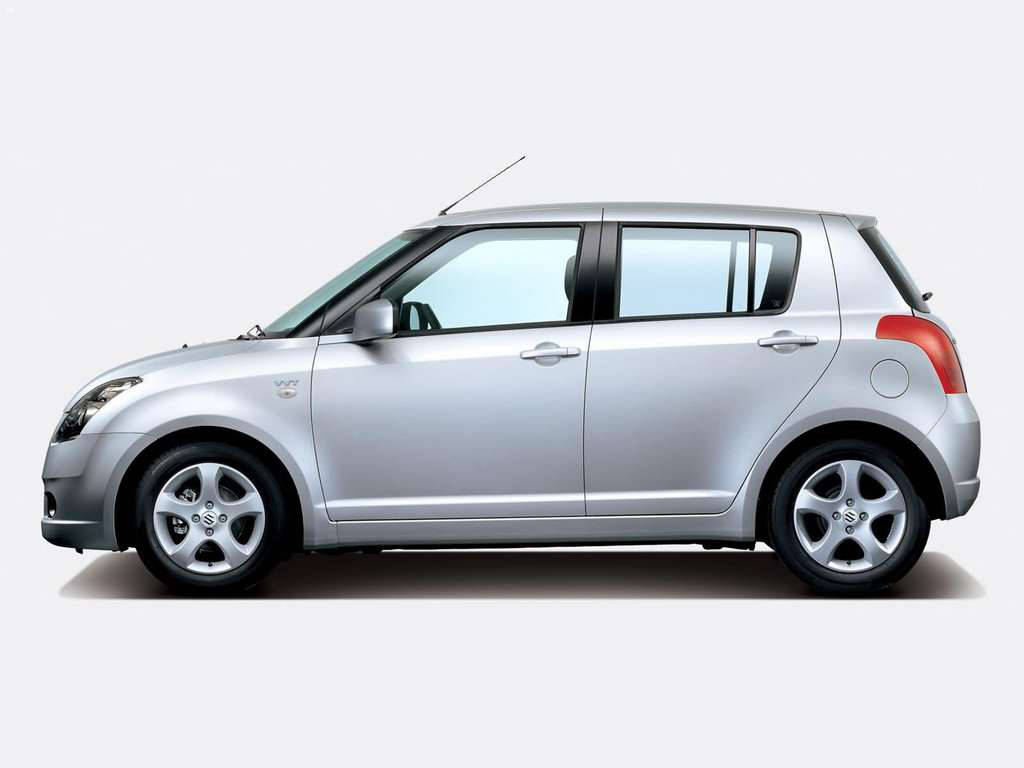
suzuki swift-suzuki in Japan since 2000
The Suzuki Swift is a subcompact car produced by Suzuki in Japan since 2000. Prior to this, the "Swift" nameplate had been applied to the Suzuki Cultus in export markets such as Australasia, Europe, India and North America.
Contents
* 1 Predecessor
* 2 First generation (2000–2004)
o 2.1 HT51S, HT81S
o 2.2 HR51S, HR81S
* 3 Second generation (2004–2010)
o 3.1 Maruti Suzuki Swift
o 3.2 Plug-in hybrid
* 4 Third generation (2010–present)
o 4.1 Suzuki Swift S-Concept
* 5 References
* 6 External links
Predecessor
Main article: Suzuki Cultus
The Suzuki Swift began as a marketing and manufacturing rebadge of the Suzuki Cultus a supermini (or subcompact) manufactured and marketed worldwide across three generations and four body configurations—three-door hatchback, four-door sedan, five-door hatchback and two-door convertible—and using the Suzuki G engine family.
The Swift was marketed in the Japanese domestic market (JDM) as the Cultus and elsewhere as the Suzuki Forsa, Suzuki Jazz, Chevrolet Swift, Chevrolet Sprint and Sprint Metro, Geo and Chevrolet Metro, Pontiac Firefly, Maruti 1000, Holden Barina and Subaru Justy. Versions of the second generation Cultus were also produced until 2007 in India and the car remains in production today in Pakistan.
suzuki swift
suzuki swift
suzuki swift
suzuki swift
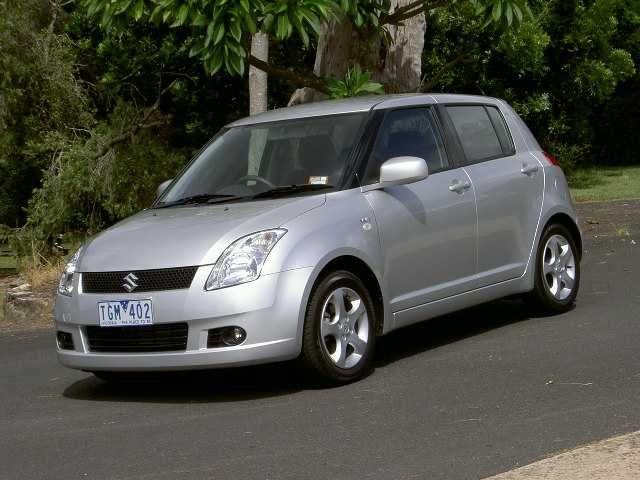
suzuki swift
suzuki swift
suzuki swift
suzuki swift
suzuki swift
Contents
* 1 Predecessor
* 2 First generation (2000–2004)
o 2.1 HT51S, HT81S
o 2.2 HR51S, HR81S
* 3 Second generation (2004–2010)
o 3.1 Maruti Suzuki Swift
o 3.2 Plug-in hybrid
* 4 Third generation (2010–present)
o 4.1 Suzuki Swift S-Concept
* 5 References
* 6 External links
Predecessor
Main article: Suzuki Cultus
The Suzuki Swift began as a marketing and manufacturing rebadge of the Suzuki Cultus a supermini (or subcompact) manufactured and marketed worldwide across three generations and four body configurations—three-door hatchback, four-door sedan, five-door hatchback and two-door convertible—and using the Suzuki G engine family.
The Swift was marketed in the Japanese domestic market (JDM) as the Cultus and elsewhere as the Suzuki Forsa, Suzuki Jazz, Chevrolet Swift, Chevrolet Sprint and Sprint Metro, Geo and Chevrolet Metro, Pontiac Firefly, Maruti 1000, Holden Barina and Subaru Justy. Versions of the second generation Cultus were also produced until 2007 in India and the car remains in production today in Pakistan.
suzuki swift
suzuki swift
suzuki swift
suzuki swift
Subscribe to:
Posts (Atom)